

Optimizing Your Mobile Design: 4 Essential User Testing Strategies to Bolster Engagement
Statistics make for stark reading when it comes to welcoming mobile users online. 53% of visitors browsing on mobile devices bounce back from a website in less than three seconds–undermining the impact of a landing page before it even has a chance. From poor loading times to accessibility issues, these bounce rates can be caused by a number of contributing factors.
With smartphones becoming increasingly prevalent, the challenge of delivering an enjoyable mobile experience is high on the agenda for businesses around the world–particularly for eCommerce platforms looking to support better conversion rates. With this in mind, it’s essential that you adapt your approach to accommodate mobile users more effectively.
Let’s take a deeper look into four essential user testing strategies to provide better insights into your website’s performance and to increase customer engagement:
Mobile-Oriented Design
Recent years have been punctuated by a post Covid-19 pandemic push towards digital transformation. This has carried some profound implications for mobile marketing. Today, data suggests that over 60% of all online traffic now comes from a mobile device.
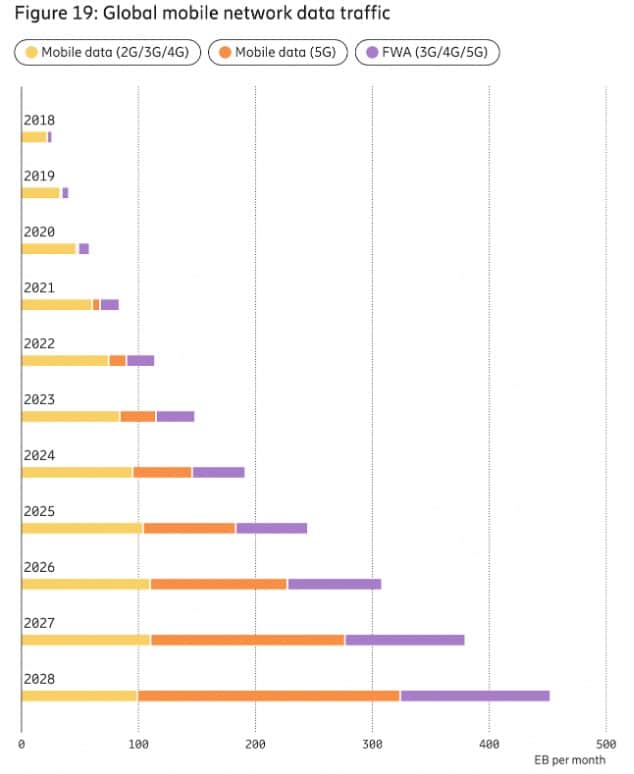
(Image: Ericsson)
According to figures from Ericsson, mobile network traffic is expected to accelerate to more than 400 Exabytes (one EB is equal to 1,000 Petabytes or one billion gigabytes (GB)). This signifies the sheer volume of traffic that’s continuing to grow through mobile usage.
With greater volumes of mobile users, businesses must act accordingly to accommodate changing user experience demands. Matters of more personalized targeting and haptic design have moved from acting as desirable features for mobile customers to essential requirements, while the necessity of quicker page loading times is also a matter of expectation.
According to a 2020 survey on app usage, some 90% of users have abandoned a mobile application because of poor performance. This customer fickleness should be enough of a warning to website owners who continually fail to review their pages regularly.
Fortunately, as UX expectations grow, so too does the potential for new innovations in this field. Smartphone accessibility has become a leading focal point for businesses as the necessity of maintaining higher engagement rates becomes more prevalent.
From multivariate testing to qualitative analysis, there are many tried and tested approaches to help holster website performance. With this in mind, let’s look at some key ways to deliver more comprehensive user testing for greater mobile UX:
Defining User Testing
No successful web design strategy would be complete without an appropriate level of user testing, and helping businesses to gauge how users interact with their website or application can be a key component in running maintenance on existing pages.
As consumers continue to rely on more mobile-based engagement, testing processes for smartphones, browser apps, different levels of data connections, and different device operating systems are an important way of ensuring that your pages don’t fall short on expectations.
Four Approaches to Build a More Impactful Mobile Strategy
Although optimising your mobile user experience model can seem like a balancing act with so many different types of smartphone, operating system, browser apps, and connectivity speeds, there are a number of effective approaches to optimize your UX. From overhauling your navigation system to investing in a mobile orientated website builder–there’s no shortage of opportunities to please your customers.
But how is it possible to comprehensively revise and discover our design faults? Here is where intelligent testing can pay dividends. Let’s take a deeper look at four user testing essentials for any businesses looking to optimize their website for mobile engagement:
Utilising A/B Testing
Testing your website can be as easy as A/B and seeing. When building a website or new mobile app, one of the most tried and tested ways to come up with a successful end product is to create multiple variations of your design and test them accordingly.
Whether these tweaks are more geared towards design ideas, landing page variations, different call-to-actions, or straightforward usability tests, the quality of audience-driven insights into your product can be highly useful.
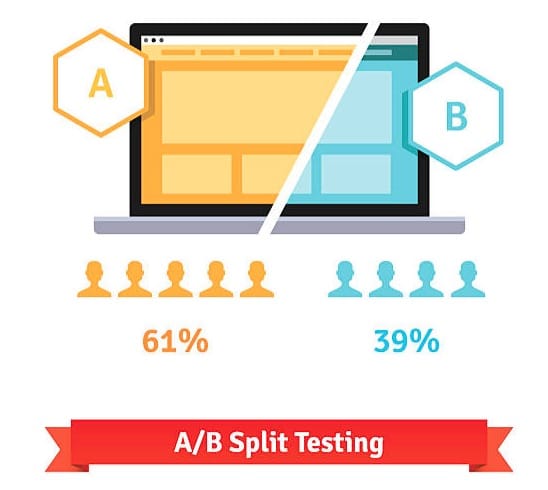
As the example above shows, A/B split testing can involve developing two different variations of your website, app, or pages, before checking engagement statistics for both versions to see which one is viewed more favorably.
According to statistics from Devopedia, more than 67% of marketers stated that they preferred A/B testing as their favourite CRO method.
Furthermore, some marketing platforms are capable of taking A/B testing to the next level with multivariate tests. These behave similarly to A/B tests but multiple web elements can be customized to provide greater levels of insight into which on-page elements are the most popular for users.
Learning from Heatmaps
Another strategy that’s increasing in popularity is heatmaps. The beauty of heat maps is that they can tell you exactly how visitors are interacting with your pages. They follow eye movements to determine your most visible on-page content–paving the way for data-driven adjustments and edits.
As the example above shows, heatmaps work by displaying warmer colours to indicate where visitors are looking on-site. They also act as an excellent way of providing a more visual level of analysis for your data. Throughout the testing period, it’s essential that you continually revise what content is being engaged with and what isn’t to ensure that your CTAs are operating as they should.
When it comes to mobile design, heatmaps are great for signifying what areas visitors are interacting with and how quickly they bounce back from certain pages or content. From in-depth scroll maps to click maps, it’s possible for website designers to see exactly how their content is being digested by users.
If your heatmaps suggest that content isn’t being engaged with enough, you can make changes on the fly to either shorten your text to better suit attention spans or adapt your pages to become altogether more accessible for all browsers.
Qualitative Data Offers More Direct Insights
Although passive testing can be a great way of quickly getting to grips with user engagement trends, and to make adjustments with relative ease, it’s possible to delve into more qualitative data as a means of discovering more focused insights.
Qualitative data can come in the form of in-depth studies that require users to complete a set of tasks in order to collect data on-site. Mostly focused on usability and accessibility, these studies can help to deliver more direct optimization insights to help create a more seamless UX model on-site.
How you collect this data is up to you, but focus groups and face-to-face interviews are a popular and more traditional approach to gathering data from refined groups of customers. Although the sample size associated is altogether smaller, it can empower users to describe exactly what they experience when navigating on your website.
By stopping to take on richer data sets, greater levels of feedback can help your website to evolve without the necessity of ripping out ideas later down the line due to a lack of audience enthusiasm.
Tap Into Your Community
While we’ve covered many somewhat technical approaches to optimizing your website’s mobile design, this is a process that doesn’t have to be overly complicated. One of the most straightforward ways to gain actionable insights for your website design is by starting a conversation with your customers.
As a standard consideration, you should always make it easy for your customers to get in touch with you and to share their thoughts and frustrations. Social media can be a great place for tapping into a more widespread stream of conversations surrounding your business.
By continually engaging with your customers, it’s possible to monitor whether they’re having any recurring issues with your pages. You may want to consider embedding a feedback from on your website to hear the thoughts of users, or by sending an email survey for customers who recently completed a purchase.
Hearing direct user feedback, particularly from the many mobile-based browsers who interact with your site, can help to illuminate shortcomings and to point you in the right direction for improvement.
As mobile marketing becomes more prevalent, smartphone-oriented website design will become more of a priority for businesses. With this in mind, it’s essential that you constantly test your usability and the engagement you receive from certain features and content. By monitoring your engagement today, you can secure an even greater and positive volume of interactions tomorrow.

