

How Much Should You Budget for SEO Services?
In today’s digital world, having a strong online presence is crucial for businesses of all sizes. Whether you’re a small business owner, an entrepreneur, or a local tradesman in Blackpool, Lancashire, knowing how to budget for SEO services can greatly impact your online success. This guide will explain everything you need to know about SEO budgeting, helping you make smart decisions.
Factors Influencing SEO Costs
Website Size
The size of your website affects SEO costs. Larger websites with many pages need more optimisation, which can increase the cost. Smaller websites may need less work, resulting in lower costs.
Competition
The level of competition in your industry also affects SEO pricing. Highly competitive industries, where many businesses are targeting the same keywords, often require more aggressive and costly SEO strategies. Less competitive niches may see results with smaller investments.
Goals and Objectives
Your specific goals and objectives will influence the cost of SEO services. If you’re aiming for rapid growth and top rankings for competitive keywords, you’ll likely need to invest more. If your goals are more modest, like improving local search visibility, the costs may be lower.
Current SEO Status
The current state of your website’s SEO can impact the cost of services. Websites with significant technical issues or those penalised by search engines may require more work to achieve desired results. Websites with a solid foundation may need less intensive optimisation.
What Businesses Don’t Appreciate About SEO Budgets
SEO is an area where you truly get what you pay for. Investing adequately in SEO services can significantly impact your online presence and business growth.
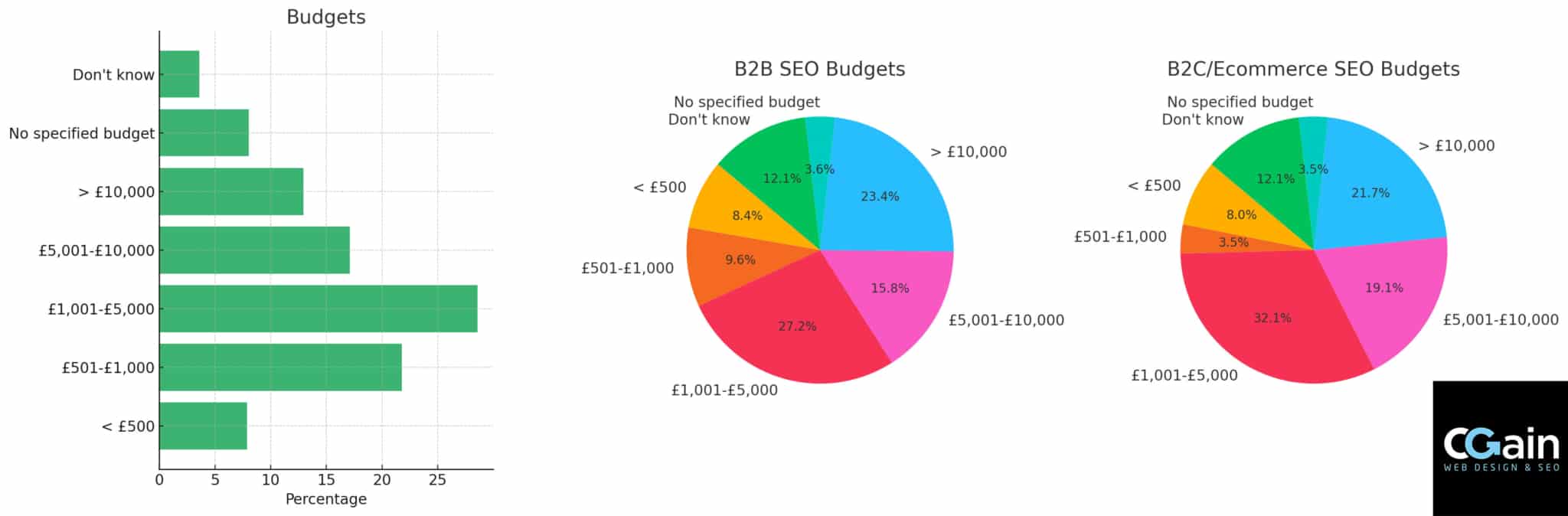
According to recent data, over half of all UK SEO professionals work with monthly budgets ranging from £500 to £5,000, with 28.6% reporting budgets in the £1,001-£5,000 range.
Many business owners are reluctant to invest in SEO, often because they lack understanding of how search marketing works and are too busy running their businesses to learn about SEO.
Most industries follow a standardised, step-by-step process to achieve specific outcomes for marketing spend. Many business owners mistakenly assume SEO works the same way, treating it as a commodity.
This misunderstanding leads them to fall for low-cost offers like £99/month “guaranteed page one” services from spammers and scammers, which never deliver meaningful results.
The Cost of Cheap SEO
In my experience locally, and within various internet marketing groups on social media, I’ve noticed a worrying trend: an influx of inexperienced individuals posing as SEO professionals and taking on clients. This alarming rise in unqualified practitioners is something every business should be cautious about.
One common scenario goes like this: a novice marketer boasts, “I just landed a client who wants to rank for [keyword x] – how do I do it?” This question highlights a fundamental lack of expertise, yet these individuals are entrusted with crucial aspects of a client’s digital presence.
Equally concerning is the prevalent use of dubious link schemes, such as private blog networks and third-party pages known as parasite SEO. These tactics are employed without fully informing clients of the associated risks. Moreover, there’s a troubling trend of using AI to generate content at scale without proper fact-checking, leading to potentially misleading or inaccurate information being published.
As a Fellow of The Chartered Institute of Marketing, I urge businesses to seek out seasoned professionals who prioritize ethical, sustainable SEO practices. The cost of cheap, ill-informed SEO can be far greater than the investment in quality, experienced services.
Types of SEO Services
On-Page SEO
On-page SEO involves optimising individual pages on your website to improve their search engine rankings. This includes optimising content, meta tags, headers, and images. By making each page relevant and valuable to users, you can enhance your website’s overall SEO performance.
Off-Page SEO
Off-page SEO focuses on activities outside your website that can impact its ranking. This mainly involves building high-quality backlinks from reputable websites. Backlinks act as votes of confidence, signalling to search engines that your website is trustworthy and authoritative.
Technical SEO
Technical SEO involves optimising the technical aspects of your website to ensure that search engines can crawl and index it effectively. This includes improving site speed, fixing broken links, and ensuring mobile-friendliness. A technically sound website provides a better user experience and can positively impact your search rankings.
Local SEO
Local SEO is crucial for businesses that serve a specific geographic area. It involves optimising your website and online presence to attract local customers. This includes creating and optimising your Google My Business profile, building local citations, and generating positive reviews.
SEO Pricing Models
Hourly Rates
Some SEO professionals charge by the hour. This pricing model is often used for consulting services or smaller projects. Hourly rates can vary widely based on the expert’s experience and location.
Monthly Retainers
Monthly retainers are a common pricing model for ongoing SEO services. Businesses pay a fixed monthly fee for a set of services, such as content creation, link building, and technical optimisation. This model provides consistency and allows for continuous improvement.
Project-Based Pricing
Project-based pricing involves paying a fixed fee for a specific project, such as a website audit or a content overhaul. This model is suitable for businesses with one-time needs or those looking to address specific issues.
Performance-Based Pricing
Performance-based pricing ties the cost of SEO services to the results achieved. For example, you might pay a percentage of the revenue generated from organic search traffic. While this model can be attractive, it requires clear and measurable goals.
Calculating SEO ROI
What is ROI?
Return on Investment (ROI) is a critical metric for evaluating the effectiveness of your SEO efforts. It measures the revenue generated from your SEO activities relative to the cost of those activities. A positive ROI indicates that your investment is paying off.
Lifetime Value of a Customer
To accurately calculate SEO ROI, it’s essential to consider the lifetime value of a customer (LTV). LTV represents the total revenue a customer is expected to generate over their lifetime. By factoring in LTV, you can get a more accurate picture of the long-term benefits of your SEO investment.
How to Calculate SEO ROI
To calculate the ROI of your SEO efforts, use the following formula:
[ \text{SEO ROI} = \frac{\text{Lifetime Profits from New Customers Acquired in One Month}}{\text{Monthly Organic Marketing Spend}} ]
This formula helps you understand the true value of your SEO investment by considering both immediate and long-term returns.
DIY SEO vs. Hiring a Professional
Pros and Cons of DIY SEO
DIY SEO can be a cost-effective option for businesses with limited budgets. It allows you to learn and implement SEO strategies at your own pace. However, it requires a significant time investment and a steep learning curve. Additionally, without expert knowledge, you may not achieve the desired results.
Benefits of Hiring an SEO Expert
Hiring an SEO expert can provide numerous benefits. Professionals have the experience and knowledge to implement effective strategies quickly. They stay updated with the latest SEO trends and algorithm changes, ensuring your website remains competitive. Moreover, outsourcing SEO allows you to focus on other aspects of your business.
Cost Comparison
While DIY SEO may seem cheaper initially, it can be more costly in the long run if you don’t achieve the desired results. Hiring an SEO expert may require a higher upfront investment, but it can lead to better and faster outcomes, ultimately providing a higher ROI.
Choosing the Right SEO Agency
What to Look for in an SEO Agency
When selecting an SEO agency, consider factors such as experience, expertise, and reputation. Look for agencies like CGain with a proven track record of success and positive client testimonials. Additionally, ensure they offer services tailored to your specific needs and goals.
Questions to Ask Potential Agencies
Before hiring an SEO agency, ask questions to gauge their suitability. Inquire about their experience in your industry, the strategies they use, and how they measure success. Additionally, ask for case studies or examples of past work to assess their capabilities.
Red Flags to Avoid
Be wary of agencies that make unrealistic promises, such as guaranteed top rankings or overnight success. Avoid those that use black-hat SEO techniques, which can lead to penalties from search engines. Transparency and ethical practices are crucial when choosing an SEO partner.
SEO Tools and Resources
Free SEO Tools
Several free SEO tools can help you optimise your website. Google Analytics and Google Search Console provide valuable insights into your website’s performance. Tools like Ubersuggest and AnswerThePublic can assist with keyword research and content ideas.
Paid SEO Tools
Paid SEO tools offer advanced features and more comprehensive data. Tools like Ahrefs, SEMrush, and Moz provide in-depth analysis, competitor insights, and backlink tracking. Investing in these tools can enhance your SEO efforts and yield better results.
Learning Resources
To stay updated with the latest SEO trends and best practices, leverage learning resources such as blogs, webinars, and online courses. Websites like Moz, Search Engine Journal, and HubSpot offer valuable insights and educational content for SEO enthusiasts.
SEO Budgeting Tips
Setting a Realistic Budget
When budgeting for SEO, set realistic expectations based on your goals and resources. Consider factors such as the competitiveness of your industry, the size of your website, and the level of expertise required. A well-planned budget ensures you allocate sufficient resources for effective SEO.
Prioritising SEO Tasks
Not all SEO tasks are created equal. Prioritise tasks that have the most significant impact on your website’s performance. Focus on high-priority areas such as technical SEO, content optimisation, and link building. This approach ensures you get the most value from your investment.
Tracking and Adjusting Your Budget
Regularly monitor your SEO performance and adjust your budget as needed. Use tools like Google Analytics to track key metrics such as organic traffic, conversions, and rankings. If certain strategies are not yielding the desired results, reallocate your budget to more effective tactics.
Case Studies and Success Stories
Real-Life Examples
Examining real-life examples of successful SEO campaigns can provide valuable insights. For instance, a local Blackpool business might have increased its online visibility and customer base through targeted local SEO strategies.
Lessons Learned
Analysing the successes and challenges faced by other businesses can offer valuable lessons. Learn from their experiences to avoid common pitfalls and implement effective strategies. Understanding what works and what doesn’t can help you refine your SEO approach.
Key Takeaways
Key takeaways from case studies and success stories include the importance of a well-rounded SEO strategy, the value of continuous optimisation, and the benefits of working with experienced professionals. These insights can guide your SEO efforts and improve your chances of success.
FAQs
How much should I budget for SEO services?
The cost of SEO services varies based on factors such as the size of your website, the competitiveness of your industry, and your specific goals. On average, small to medium-sized businesses can expect to spend between £400 to £5,000 per month on SEO services.
What is the ROI of SEO?
The ROI of SEO depends on various factors, including the lifetime value of a customer and the effectiveness of your SEO strategies. By calculating the revenue generated from organic search traffic relative to your SEO spend, you can determine your ROI.
Can I do SEO myself?
Yes, you can do SEO yourself, but it requires a significant time investment and a steep learning curve. While DIY SEO can be cost-effective, hiring an expert can yield better and faster results.
How long does it take to see results from SEO?
SEO is a long-term strategy, and it can take several months to see significant results. Factors such as the competitiveness of your industry, the quality of your SEO efforts, and search engine algorithms can influence the timeline.
What are the most important SEO tasks?
High-priority SEO tasks include technical SEO, content optimisation, and link building. These tasks have a significant impact on your website’s performance and should be prioritised in your SEO strategy.
How do I choose the right SEO agency?
When choosing an SEO agency, consider factors such as experience, expertise, and reputation. Ask questions to gauge their suitability and look for agencies with a proven track record of success and positive client testimonials.
Conclusion
Budgeting for SEO services is a critical aspect of enhancing your online presence and achieving business growth. By understanding the factors influencing SEO costs, exploring different pricing models, and calculating ROI, you can make informed decisions that align with your goals. Whether you choose to do SEO yourself or hire a professional, investing in SEO can yield significant long-term benefits. Remember to prioritise high-impact tasks, track your performance, and adjust your budget as needed to maximise your SEO success.
Sources

